
Founded in 1991 by Hélène Leclerc and a group of E.Leclerc store owners, Tissaia has become the group’s go-to textile brand over the past thirty years. Ranked France’s 4th favourite brand, it has spent more than three decades combining accessibility with responsible sourcing. Every year the brand releases men’s, women’s, and children’s collections alongside a full home linen range bedroom to bathroom all at an E.Leclerc price point in stores and online.
SIPLEC E.Leclerc manages sourcing, product development, purchasing, and quality and sustainability for the brand. To develop future Tissaia collections, our team works with manufacturing partners who meet our social and ethical standards.
Positioning
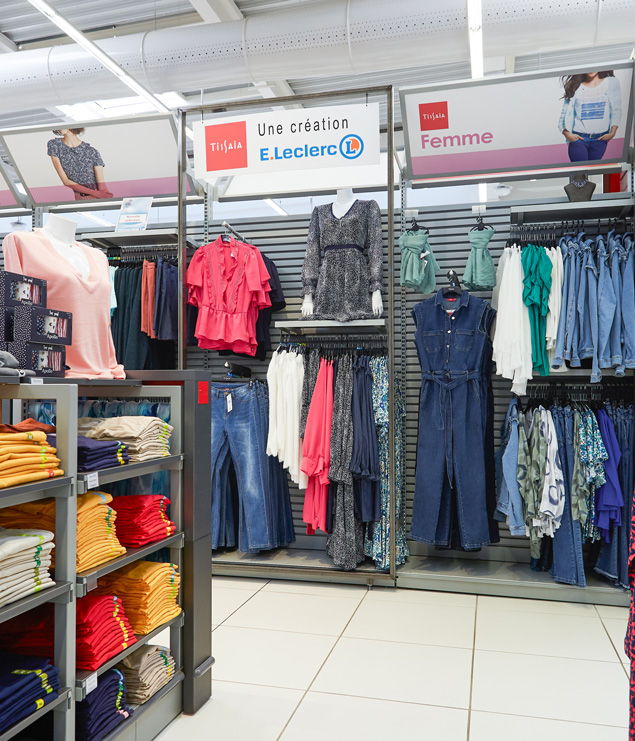
Tissaia is E.Leclerc’s mid-range answer to everyday fashion and home linen: seasonal basics and wardrobe essentials for the whole family, plus a full home textile range covering bedding and bath.
With over 5,000 references in the catalogue, it’s one of E.Leclerc’s biggest non-food private labels.
Growth is built on long-term manufacturing partnerships, with responsible production as a firm requirement.
Sourcing and quality requirements
SIPLEC E.Leclerc has spent several years overhauling Tissaia’s quality standards. Since 2024, we have been running a structured responsible purchasing program (CSR Alliance) with our suppliers, covering eco-design, traceability, decarbonisation and working conditions. The goal is to recognise and support CSR progress across our entire value chain, and to give customers the information they need to make informed choices. From early 2026, a textile ec-score is being rolled out in stores across the Tissaia range.
Nearly 2,700 references in the catalogue carry at least one of three internationally recognised certifications:
- – GOTS (Global Organic Textile Standard) : organic cotton, traceable from raw fibre to finished product
- – GRS (Global Recycled Standard) : recycled materials, with full traceability and integrity of recycled fibres
- – OEKO-TEX Standard 100 : no toxic or harmful substances in the finished product

What the range covers
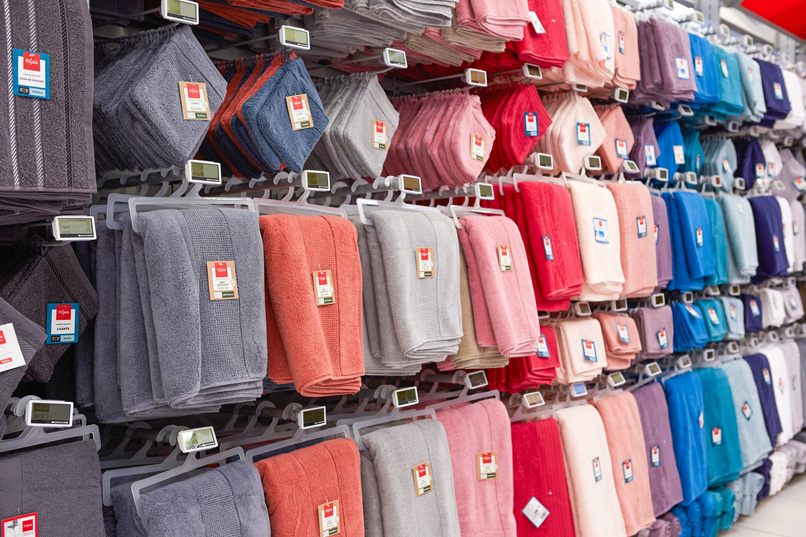
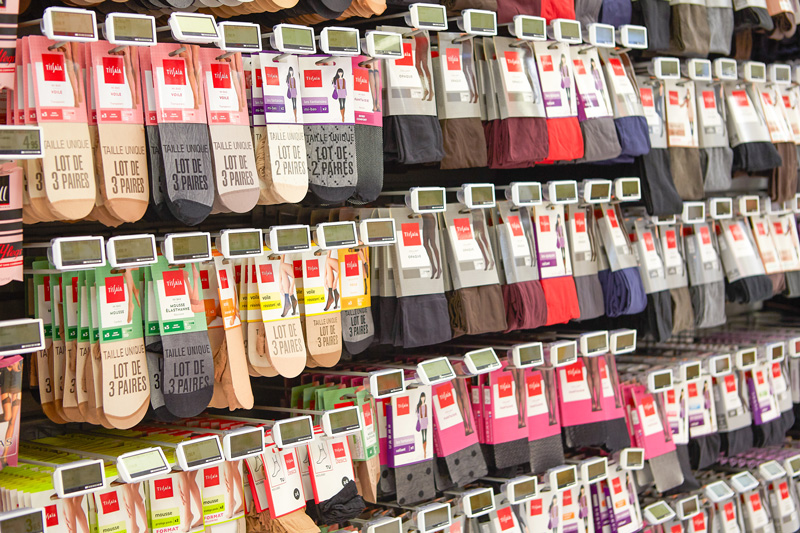
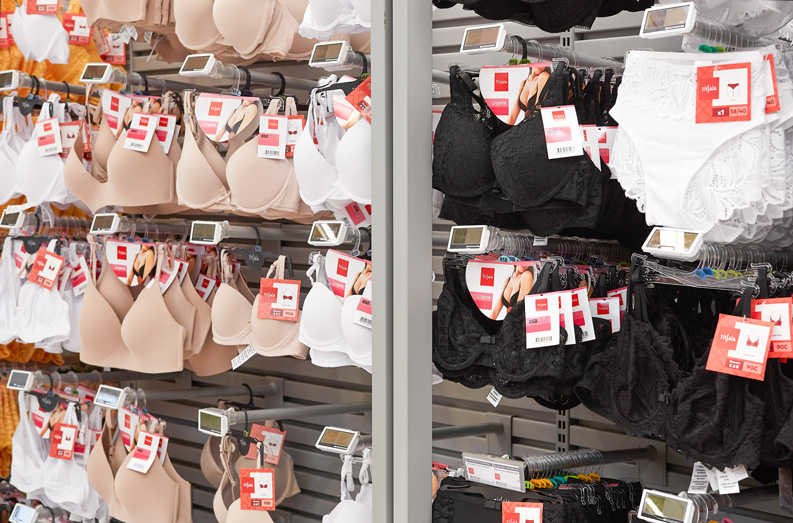
Tissaia spans fashion and home textiles across six areas: womenswear (tops, dresses, trousers, jackets, sportswear, underwear, socks), menswear (shirts, t-shirts, polos, trousers, knitwear, underwear, socks), childrenswear (boys and girls aged 2–14, school and casual), bed linen (sheets, duvet covers, pillows, bolsters, duvets), bath linen (towels, wash mitts, robes, bath mats), and home textiles (tablecloths, tea towels, throws, cushions).
Every category runs on a two-season cycle (spring/summer and autumn/winter) alongside a year-round basics range.
Tissaia’s textile eco-score
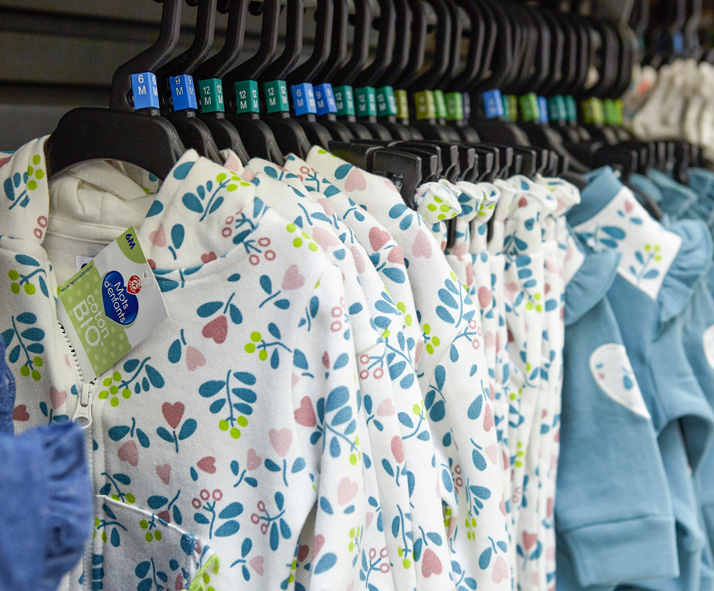
Ahead of any regulatory requirement, SIPLEC has introduced environmental labelling across its own label clothing ranges. By 2026, over 4,000 references across Tissaia, Eco+ and Mots d’Enfants will carry a textile eco-score, developed with Fairly Made using the Ecobalyse methodology. A QR code on each product label gives shoppers direct access to the product’s environmental footprint, CO2 breakdown and traceability data.
Why supply Tissaia?
Supplying Tissaia means putting your expertise behind a fashion brand that French shoppers know and trust, with national distribution across the full E.Leclerc network. If you manufacture in textiles or home linen, we’d like to hear from you.
FAQ
- 1.What do you look for in a supplier?
Production capacity (volumes, lead times, and flexibility) social and environmental compliance, and relevant product certifications (GOTS, GRS, OEKO-TEX).
- 2.How does SIPLEC audit its manufacturing partners?
Factory audits follow the AMFORI BSCI framework, covering working conditions, environmental management, legal compliance, and employee safety.
3. How does the Tissaia textile eco-score work?
Each product label carries a QR code giving smartphone access to the garment’s environmental cost per 100g of product, a breakdown of CO₂ emissions, water and energy consumption, and traceability and certification data. The calculation is based on the French Ecobalyse methodology, overseen by the Ministry for Ecological Transition, developed in partnership with Fairly Made, a French specialist in textile traceability.